
FFP – Advancing a Feminist Foreign Policy on Migration in Nigeria and Pakistan
Amplifying women's voices in migration decision-making
In 2023, Seefar implemented a five-month campaign in Nigeria and Pakistan focused on reshaping how young people – particularly women – engage with migration. Rooted in a Feminist Foreign Policy approach, the project raised awareness about the risks of irregular migration and elevated women's voices in migration decision-making. The campaign combined educational outreach, individual counselling, civil society engagement, and digital outreach to reach a wide and diverse audience.
The Challenge
Women and young people in Nigeria and Pakistan face significant gender-specific vulnerabilities in migration. Risky migration decisions are often made without access to accurate, gender-sensitive information or support networks.
Our Approach
Seefar deployed a feminist foreign policy framework – combining teacher training, one-on-one counselling, CSO capacity building, and digital campaigns – to shift migration narratives and empower women as agents of change.
Project Details
| Timeline | August 2023 – January 2024 |
| Countries | Nigeria and Pakistan |
| Target Audience | Potential and transit migrants aged 18–34, Nigerian students, teachers, and women-led CSOs in Nigeria and Pakistan |
| Beneficiaries Reached | 3,077 individuals through counselling sessions; over 10 million reached via social media; 417 teachers trained |
How the Campaign Worked
A Multilayered Approach to Awareness and Empowerment
At the heart of the campaign was a comprehensive strategy integrating educational outreach, individual counselling, and capacity building for women-led civil society organisations (CSOs). In Nigeria, 417 teachers were trained – through both in-person and online modalities – to facilitate sessions with students on the risks of irregular migration and the gender-specific vulnerabilities involved. Teachers carried that knowledge into over 215 classroom sessions, reaching an estimated 3,000 students. Over 90% of trained teachers felt empowered and motivated to continue this work long after the initial training.
"The training is highly educational and everyone should be made aware. It is especially timely during this harsh economy as it will guide young people from succumbing to the pressure to leave for foreign countries by all means."
– Nigerian teacherThe campaign also offered one-on-one counselling to over 3,000 young adults across Nigeria and Pakistan. These sessions shifted perceptions and behaviours: 36% of participants abandoned their irregular migration plans, and many others redirected their focus toward legal alternatives, job opportunities, or local entrepreneurship.
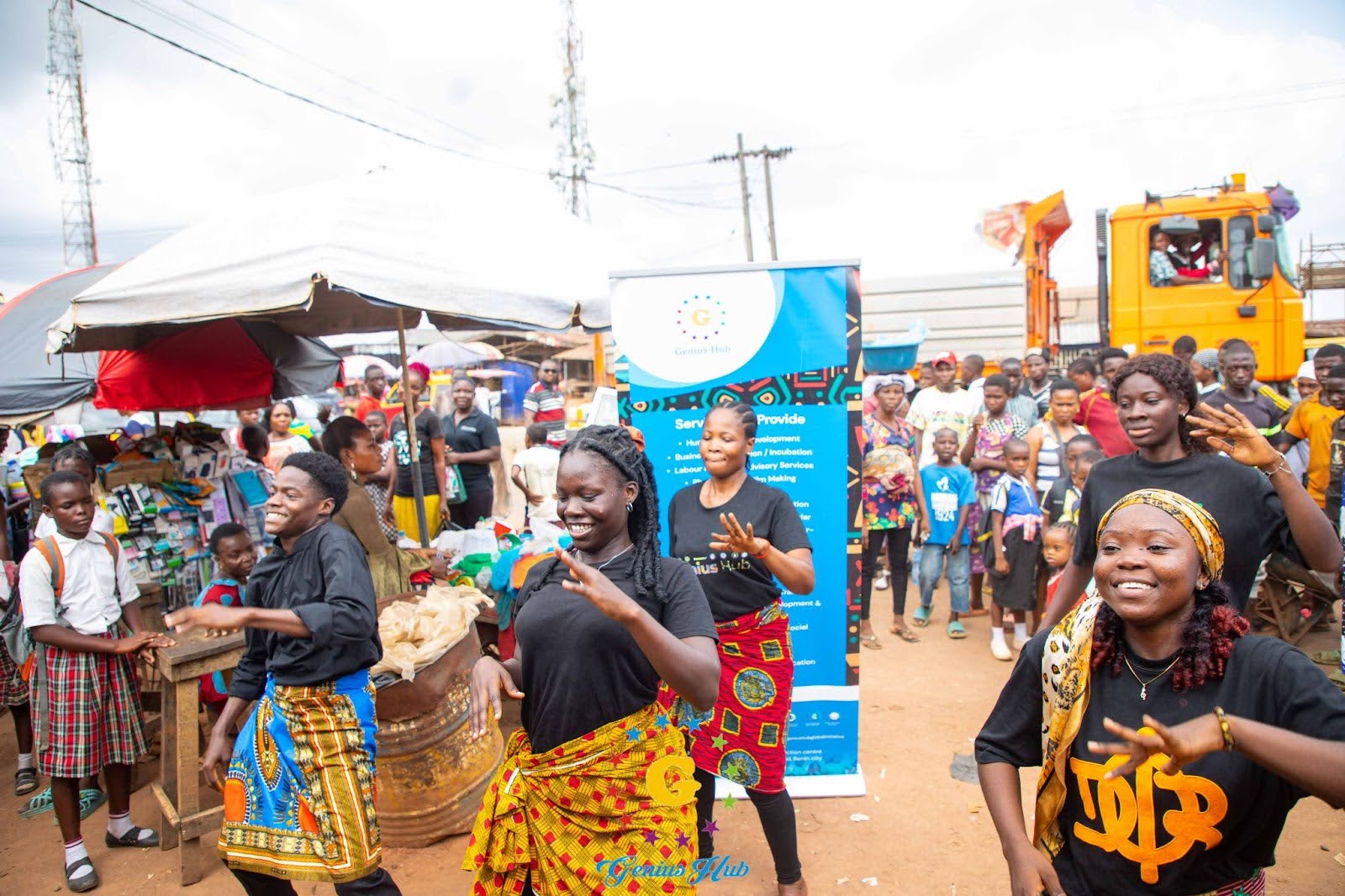
Her Migration Voice Campaign, Genius Hub Global, Edo State, Nigeria
Ten women empowerment-focused CSOs – five in each country – received capacity building through workshops and mentorship, enabling them to implement gender-sensitive campaigns that reached tens of thousands both online and in person.
"The knowledge and skills we've gained will undoubtedly have a lasting impact on our work in migration and women's rights. Upon returning to our organisation, we are eager to provide step-down training to the rest of our staff."
– CSO beneficiary, NigeriaDigital Innovation and Targeted Messaging
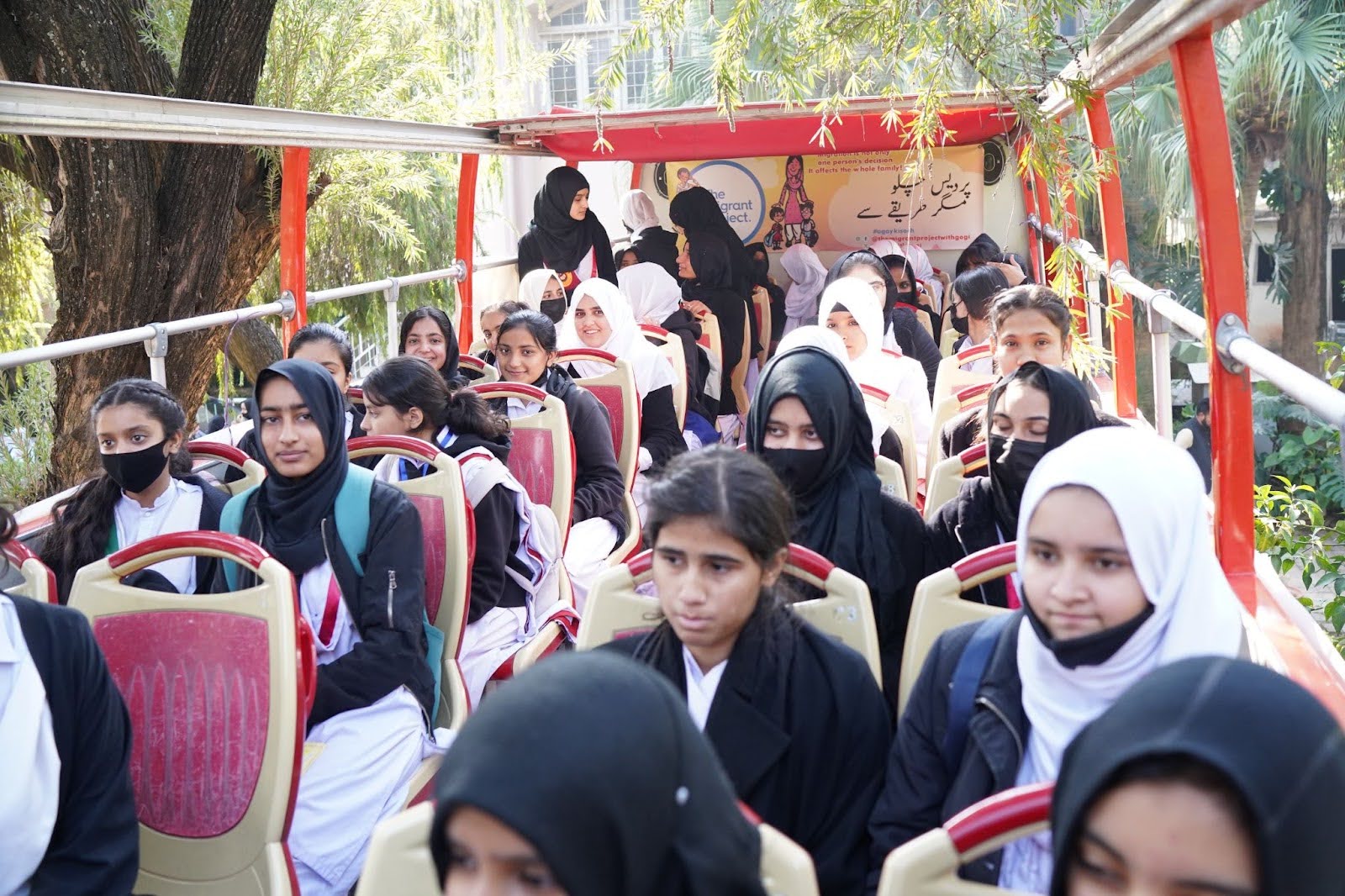
Gogi Studio Campaign Bus Tour, Islamabad, Pakistan
Social media played a vital role in scaling the campaign's reach. Through The Migrant Project (TMP) pages in both countries, the campaign reached over 10 million people and drove over 6 million post engagements.
Rigorous A/B testing showed that risk-based messaging was most effective in reaching men, while narratives around the realities of migration resonated more with women. These insights cut signup costs by up to 65%, highlighting the importance of gender-responsive communication in migration discourse.
Key Achievements
10M+ reached via social media with 6M+ engagements
36% of consultees abandoned plans for irregular migration
417 teachers trained; 93% remained motivated; 100% would recommend the training
57% redirected toward legal alternatives post-counselling
43 CSO members received capacity building; 10 CSOs implemented large-scale campaigns
400+ women reached through CSO-led community workshops and school sessions
Learning and Looking Forward
While the campaign was short in duration, it offered several key insights. Digital education proved scalable – online teacher training was three times more cost-efficient than in-person and continued attracting participants after the campaign ended. Gender-sensitive counselling and peer engagement created meaningful behaviour change in a space where migration narratives are often dominated by men.
The experience affirmed that long-term engagement, especially with CSOs, is essential to sustaining impact. The next phase must involve sustained support, longer timelines, and regional expansion to deepen impact across both countries.