
Educating Youth on Safe Migration SAFE-MIT
Equipping teachers with immersive, interactive tools to help youth make informed migration decisions, and building the capacity of local partners to run evidence-based campaigns.
This project is ongoing. Results are preliminary.
“The project moved my students from awareness to action.”
Mustapha Hammed, teacher, Kwara State, Nigeria
In Africa, inaccurate information about the risks of migration, reinforced by social media and low awareness of the realities of life at destination, are driving young people toward irregular journeys.
SAFE-MIT: A Shared Foundation to Protect Against Risks of Irregular Migration and Trafficking is funded by the European Union through ICMPD’s Migration and Mobility Dialogue (MMD) Grant Facility, and implemented by Seefar together with four consortium partners - The Youth Empowerment Society (YES) in Morocco, The Youth Cafe (TYC) in Kenya, Association des Jeunes pour le Développement Local (AJDL) in Senegal, and Media Coalition and Awareness to Halt Human Trafficking (MeCAHT). The project replaces myth with lived reality through classroom education, evidence-led digital campaigns, and strengthening local NGO capacity to sustain the message long after the programme ends.
The Challenge
African youth often make migration decisions based on distorted perceptions amplified by social media. In Nigeria, 72% of young people expect European countries to help them find work on arrival.¹ In Senegal, only 40% of those aged 17–30 are fully aware of the dangers of irregular migration.²
Our Approach
SAFE-MIT deployed three complementary strategies: immersive classroom education through the escape game Turning Tides, large-scale social media campaigns and influencers’ collaborations, and digital capacity strengthening for local NGO partners across eight countries.
How the Project Worked
The Escape Game in Classrooms
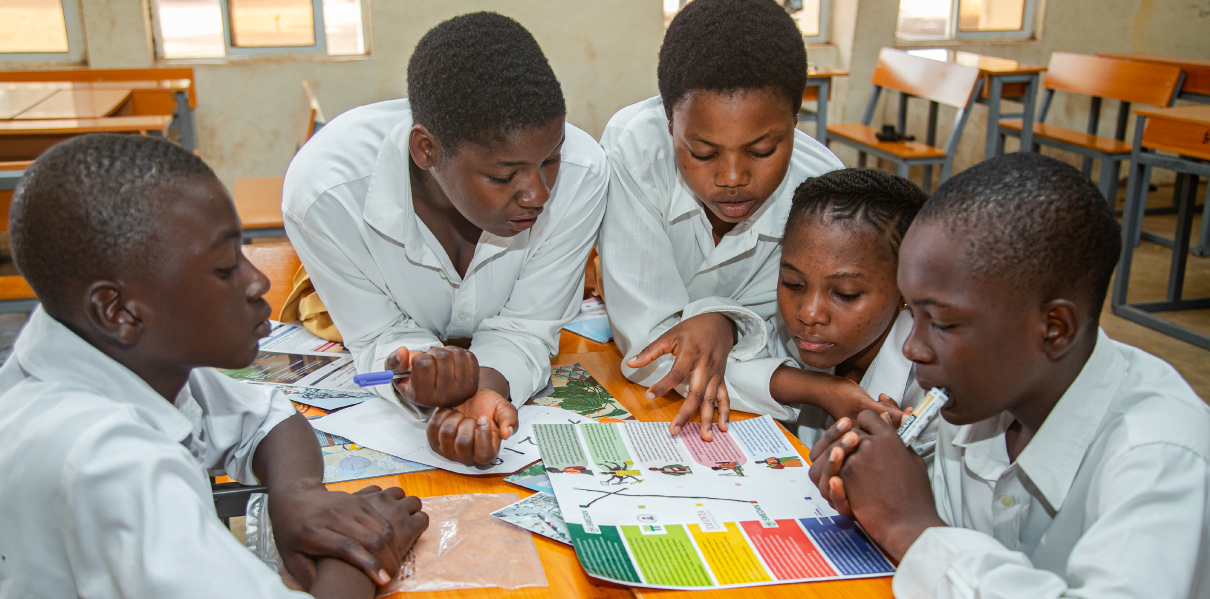
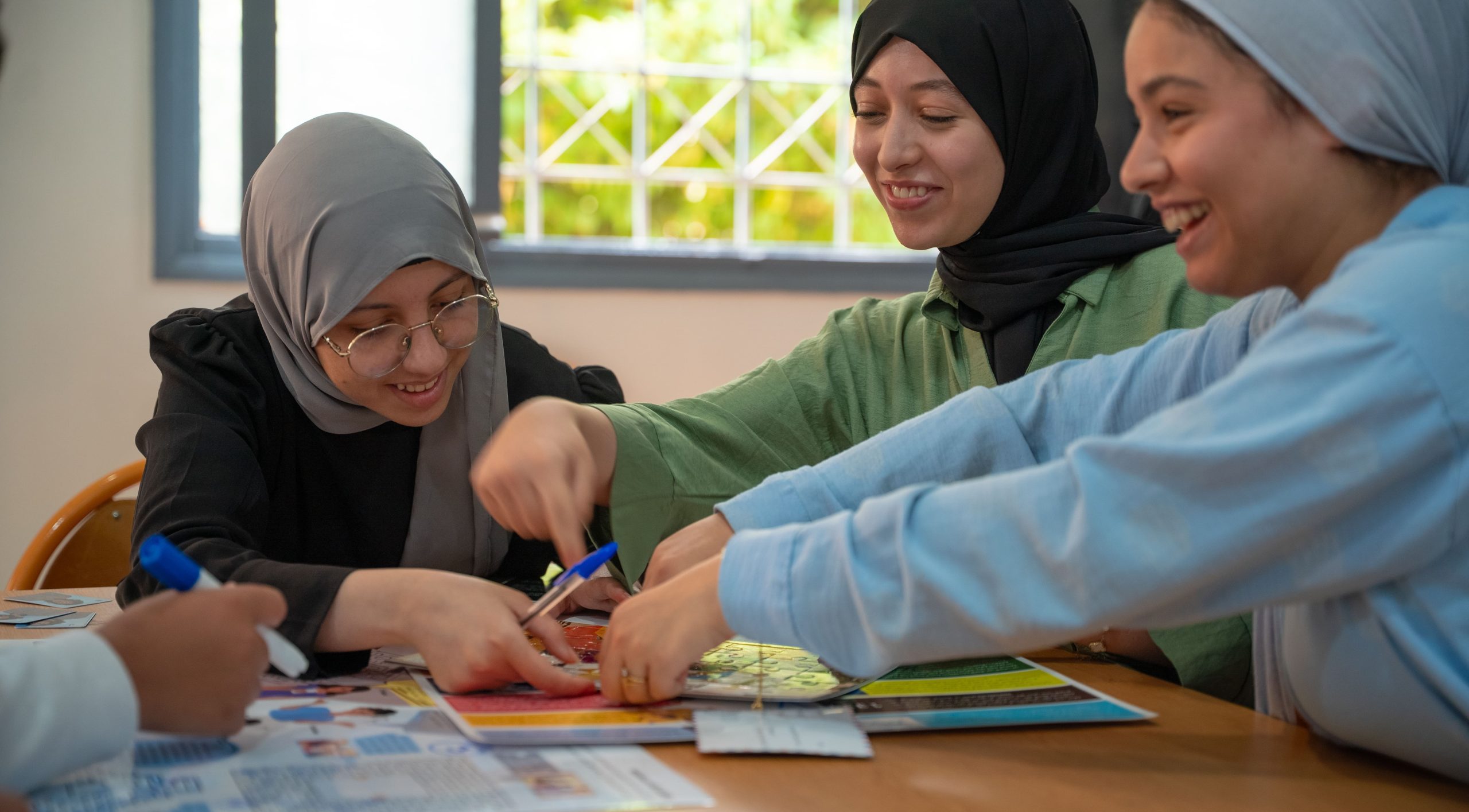
At the heart of SAFE-MIT is Seefar’s educational escape game Turning Tides, first developed in Morocco through the NLM project and now adapted to classroom realities in three additional countries. Rather than attending lectures, students work in small teams to navigate real-world migration dilemmas, make decisions, weigh consequences, and build empathy through play.
Data-Driven Social Media Campaigns
Across 16 campaigns on Meta and TikTok, The Migrant Project (TMP) - the project’s public facing brand - reached over 42 million people and generated 14 million+ engagements. This included 20 rounds of A/B testing to identify the most effective messages and content, with short-form video found to be the top-performing format. Eleven influencers amplified the content further, sharing 166 posts, stories and reels, and reaching 8.5 million people. The digital centrepiece, Informed Migration, hosts interactive games, a myth-busting quiz and country-specific videos in English, French and Arabic - built to outlast the project itself.
Strengthening Partners’ Digital Capacity
Four NGOs in Ethiopia, Uganda, Tunisia, and The Gambia were supported in developing their own evidence-based social media campaigns. All 16 staff demonstrated improved skills, and these four partner NGOs have since reached over 6 million unique accounts independently.
Strengthening Digital Capacity of Partners to Run Local Campaigns
Local ownership is central to SAFE-MIT. The project strengthens partner organisations' technical, operational and communications capacity so they can sustain this work independently. Seefar trained four "neighbouring partner" NGOs: Capsa Horizon (Tunisia), TaYa (Ethiopia), Reach A Hand (Uganda), and World View (The Gambia), to run their own social media campaigns on irregular migration. All 16 trained staff showed improved knowledge and skills (100% success rate against a 60% target), with partners publishing 111 posts reaching 6M+ accounts across the four countries.
“The training helped us move from ad hoc posting to professional, evidence-based campaigns. We can now identify who is most vulnerable and reach them with content that inspires safer choices.”
Ahmed A. Salami, Director, Worldview, The Gambia
From Evidence to Policy
SAFE-MIT’s influence is already reaching policymaking spaces in Africa and Europe. Across Kenya, Senegal, and Morocco, two themes stand out: learning through play as an effective, inclusive method, and the case for mainstreaming migration awareness across national curricula. Both are now feeding into discussions with ministries of education, and shaping the regional and international policy conversations on irregular migration and trafficking.
In November 2025, project findings and outputs were presented at the Joint Thematic Meeting of the Rabat and Khartoum Process on Migrant Smuggling and Trafficking in Human Beings, held in Abuja, Nigeria. In December 2025, the Khartoum Process Thematic Meeting From Policy to Practice in Aswan, Egypt, provided a further platform to share the project’s evidence base and methodological innovations. At the global level, The Youth Cafe (TYC) represented the project at the International Migration Review Forum (IMRF), amplifying youth voices in a key multilateral space.
Stories from the Field
Haitham, Moroccan student:
Trish and Rowland, Kenyan students
Ruth Okoirhon, Educational Outreach Expert in Nigeria
Boubacar Cissé, Senegalese Teacher
Watch more interviews and videos from the field on our Youtube playlist
A Moment of Conscience, Kwara State, Nigeria
A Teacher on the Front Line: Nairobi, Kenya
In Nigeria, after a session in Kwara State, one of Mustapha Hammed’s students asked: “Sir, what happened to the people in the game?” “She wasn’t asking about fictional characters,” he reflects. “My students weren’t just listening. They were living the experience, facing impossible choices.” That moment moved his class from awareness to action.
“The Escape Game helps participants better grasp the realities faced by migrants, the dangers they encounter, and the local alternatives available. We plan to use this tool to raise awareness in both schools and communities.”
Tidiane Diop, teacher, CEM Tatène, Thiès region, Senegal
Key Achievements
1,252
teachers trained
2,248
teacher-led sessions conducted independently
75%
teachers showed increased knowledge of migration realities
42M+
individuals reached via social media campaigns - 14 million+ engagements
108
content pieces live on InformedMigration.org in English, French, and Arabic
100%
neighbouring partner staff demonstrated improved social media marketing skills
6M+
unique accounts reached by local NGO partners in Ethiopia, Uganda, Tunisia, and The Gambia
3
high-level policy forums
Findings presented at the Rabat/Khartoum Process meetings in Abuja and Aswan, and the IMRF
This article was produced with the financial assistance of the European Union, contracted by ICMPD through the MMD Grant Facility. The contents of this article are the sole responsibility of Seefar and can under no circumstances be regarded as reflecting the position of the European Union or ICMPD.
Sources
1 Mixed Migration Centre. (2022). Mixed migration review 2022: Risk in context: Decision-making in irregular and mixed migration (p. 89). https://mixedmigration.org/wp-content/uploads/2022/12/Mixed-Migration-Review-2022.pdf
2 International Organization for Migration. Irregular migration from West Africa: Robust evaluation of peer-to-peer awareness-raising activities in four countries. https://publications.iom.int/books/irregular-migration-west-africa-robust-evaluation-peer-peer-awareness-raising-activities-four
3 Intergovernmental Authority on Development (IGAD). (2025). IGAD Population and Migration Report 2025 (Second Edition). https://igad.int/the-igad-population-and-migration-report-2025-second-edition/