
Alternatives to Irregular Migration in Kurdistan
Closing the information gap between what smugglers promise and what migrants actually experience
Every year, tens of thousands of young people in the Kurdistan Region of Iraq (KRI) face a difficult choice: risk everything on an irregular journey to Europe, or remain in a region that too often feels like it has no future to offer. A major driver of that choice is the information gap between what smugglers promise and what migrants actually experience.
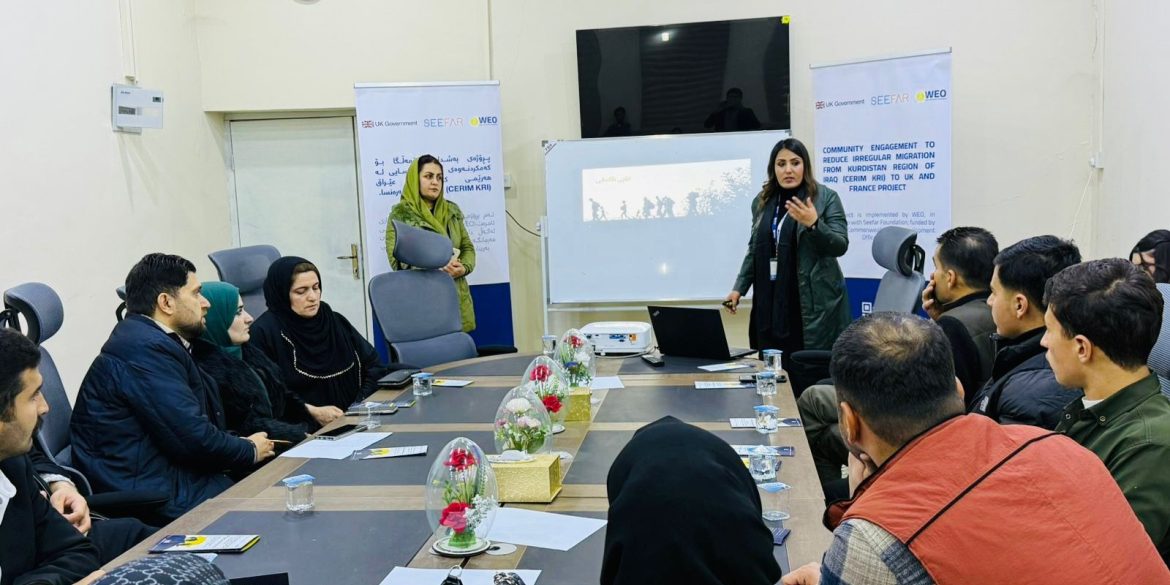
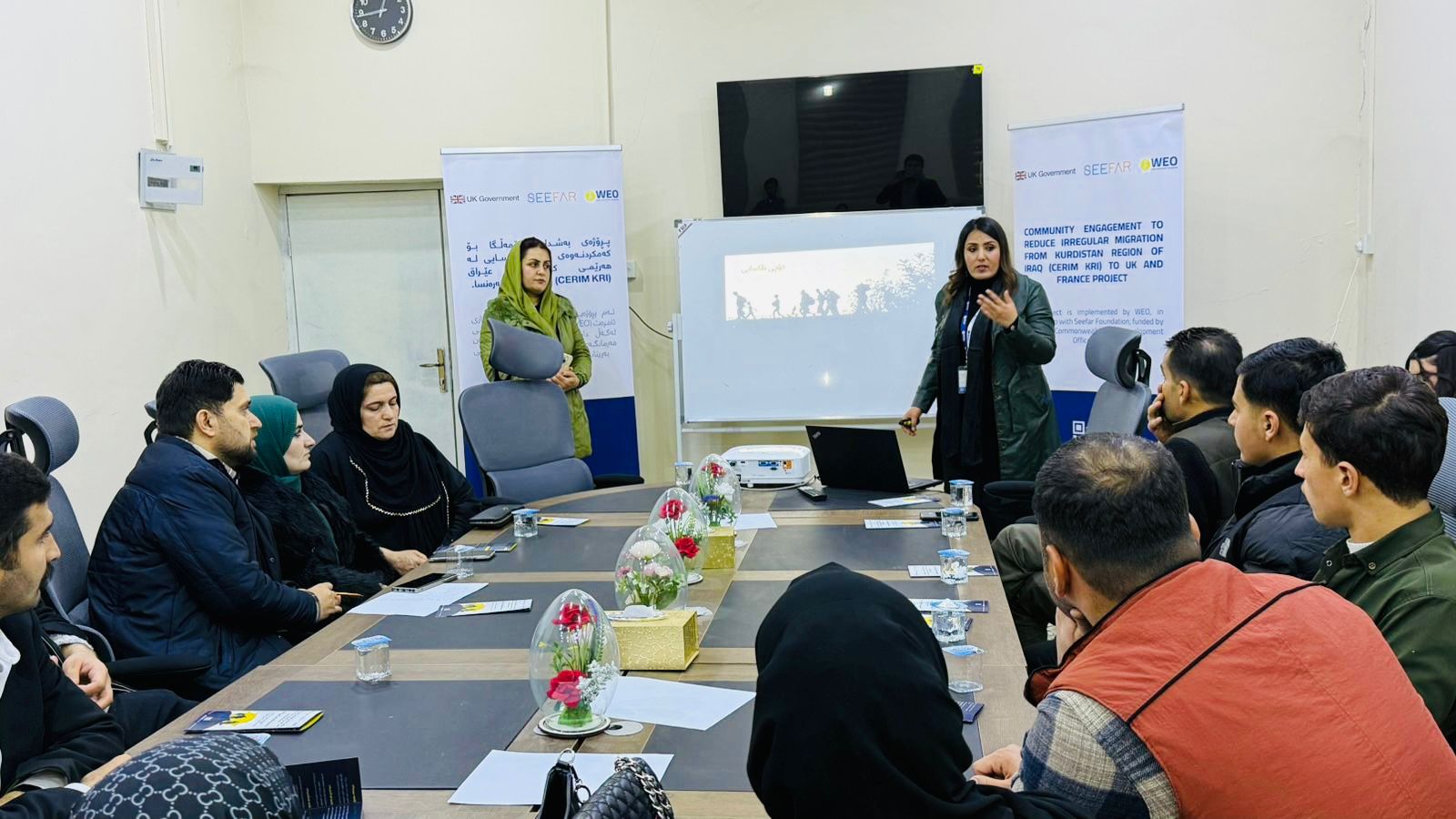
The Community Engagement to Reduce Irregular Migration (CERIM) programme set out to close that gap. Implemented by Seefar Foundation in partnership with the Women Empowerment Organisation (WEO), a Kurdish civil society organisation with deep grassroots reach, CERIM ran across four KRI governorates: Sulaymaniyah, Erbil, Duhok, and Halabja. Built on a clear premise that raising awareness of risk alone is not a sufficient deterrent, CERIM went further, offering Iraqis concrete, realistic alternatives to pursue at home rather than hopes pinned on a life abroad.
The Challenge
Young people in KRI are widely aware that irregular migration is risky, yet smugglers and social media continuously reinforce the promise of employment and stability in Europe. Knowledge of safe, local alternatives remains limited, and many potential migrants have not pursued them.
Our Approach
CERIM deployed three complementary strategies: direct community awareness activities delivered by WEO teams, a Training of Trainers (ToT) model equipping educators and religious leaders, and a purpose-built WhatsApp chatbot offering private, on-demand information in Kurdish dialects.
Project Details
| Timeline | 1 June 2025 – 31 May 2026 |
| Locations | Kurdistan Region of Iraq (Duhok, Erbil, Sulaymaniyah, Halabja) |
| Beneficiaries Reached | 23,250 total participants reached across all CERIM activities in KRI |
"I used to think irregular migration was easy and fast, with limited risks. After reading the information, I realised the journey is extremely difficult and only a small number of people actually reach their destination."
– WhatsApp migration information chatbot user, Kurdistan Region of IraqHow the Project Worked
The Challenge: Knowledge Without Alternatives
Baseline research conducted at the start of the programme confirmed what Seefar's contextual analysis had indicated: awareness of the risks of irregular migration was widespread among young people in KRI. Economic hardship, political instability, and a pervasive sense that the future lay elsewhere drove migration aspirations even among those who understood the dangers. Smugglers and social media continuously reinforced the narrative that reaching Europe, however the journey unfolded, would lead to employment, stability, and a better life.
Community leaders largely opposed irregular migration, and smugglers were widely perceived as harmful. Yet knowledge of safe, local alternatives remained limited, and a significant proportion of potential migrants had not pursued them. The project's task was to shift that dynamic through credible information, trusted voices, and the power of authentic returnees' stories.
Those alternatives, including vocational training and employment schemes within KRI, legal study abroad pathways, family reunification routes, and the growing possibilities of remote work, existed but were poorly understood and rarely seen as realistic by young people who had been told, by smugglers and social media alike, that Europe was the only path to a better life.
The Multiplier Effect: Training of Trainers in Action
The Training of Trainers model, in which project staff train community leaders who then deliver their own sessions, is a well-established approach in behaviour change programming. CERIM's results demonstrate just how powerful it can be when implemented well.
Working in partnership with Iraq's Ministries of Education and Religious Affairs, WEO secured formal commitments from both institutions to nominate participants for ToT sessions: a significant achievement that gave the programme institutional legitimacy and ensured that trained educators had the mandate and space to lead conversations in their own schools and communities.
Six Training of Trainers sessions trained 111 educators and religious leaders across KRI. The results exceeded all targets. Of trained community actors, 88% demonstrated measurable knowledge gains following their training, well above the 65% target, and went on to deliver their own awareness sessions. In practice, this meant that 81 community-led sessions reached approximately 8,100 students in schools across the region, delivered not by Seefar or WEO staff, but by the educators themselves.
"The Training of Trainers provided us with effective resources to tackle irregular migration in educational and community environments."
– Educator, ToT Training, ErbilThe cascade effect is clear: six project-led training events generated 81 community-led sessions. That multiplier dynamic is at the heart of what makes CERIM's model both cost-effective and durable.
"When we hear real stories and see what actually happens on these journeys, it changes how we think. Lived experiences are much stronger than just information."
– Student participant, Duhok UniversityInnovation Spotlight: The WhatsApp Chatbot
One of CERIM's most significant innovations was the development and deployment of a bespoke two-way WhatsApp chatbot, a first-of-its-kind tool for migration awareness work in KRI. Designed and built by Seefar, the chatbot operates in English and both major Kurdish dialects, Badini and Sorani, with automatic dialect detection ensuring that users receive content in their preferred language. It integrates video, real-life returnee stories, factual information on asylum processes, and guidance on safe and legal alternatives including studying abroad, legal family reunification, and remote work.
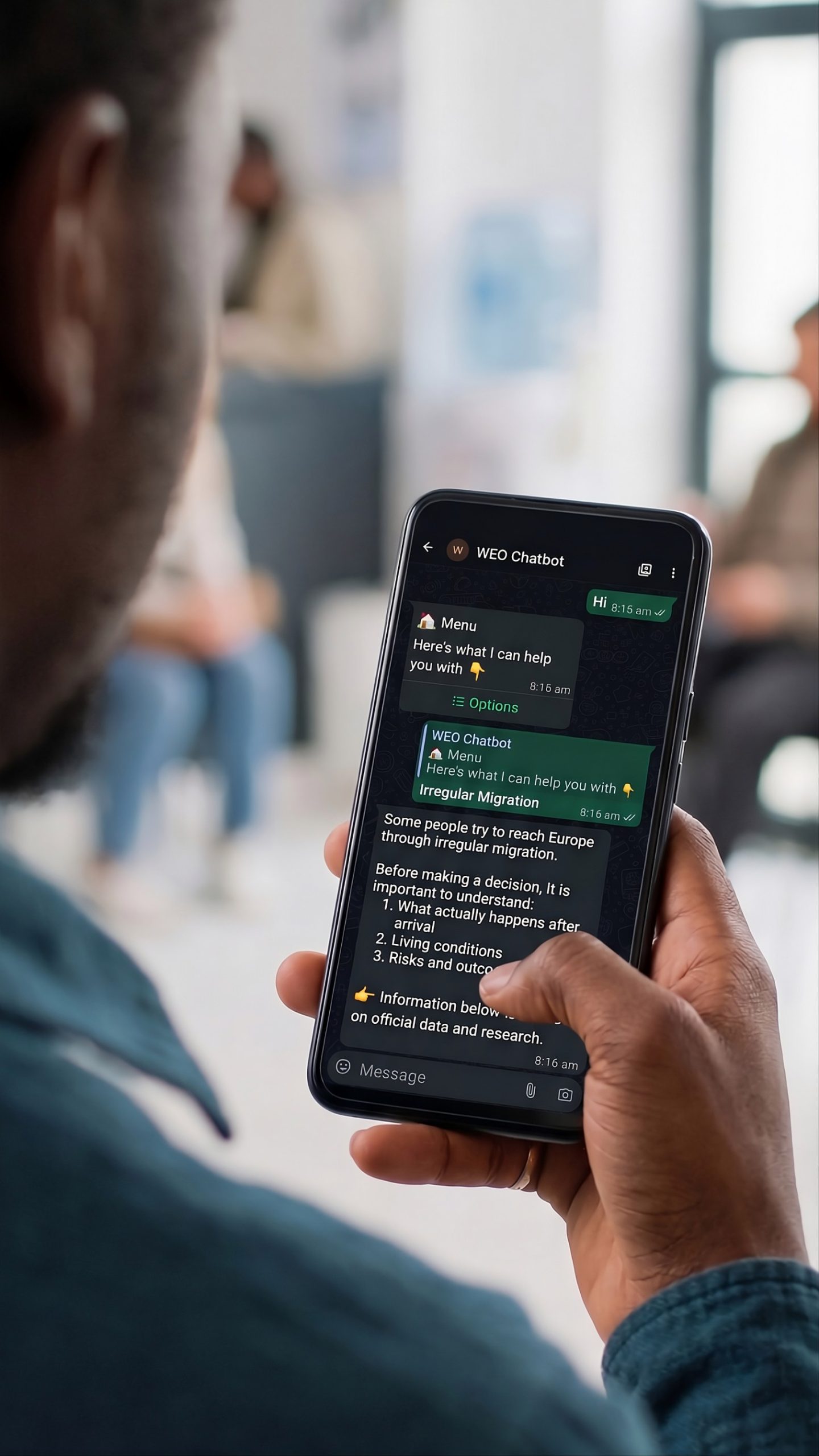
CERIM's WhatsApp chatbot, available in English, Badini, and Sorani
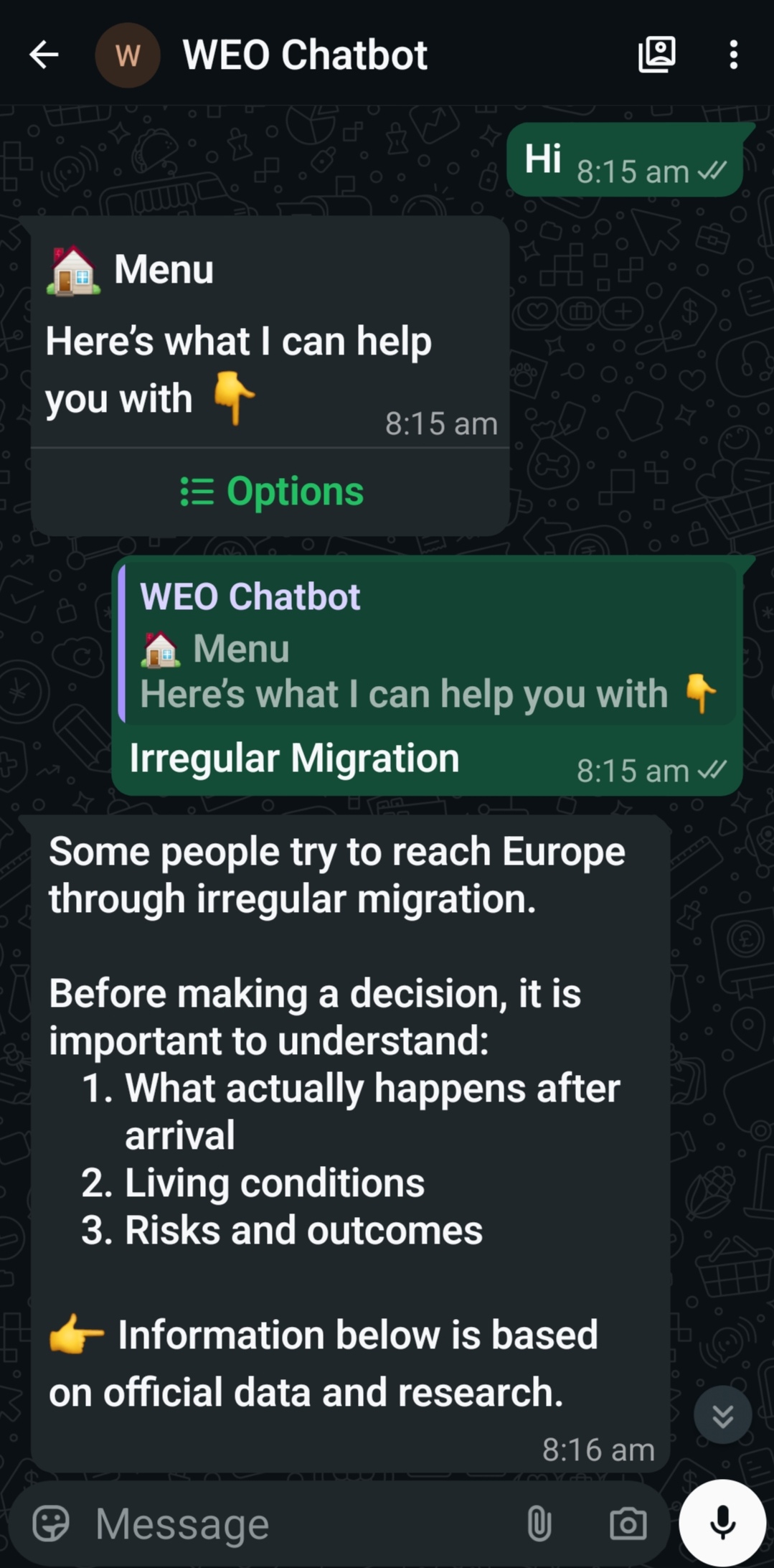
Returnee stories, asylum process information, and guidance on legal alternatives delivered on demand
Focus group research revealed what community-based sessions alone could not easily address: many potential migrants feel too ashamed to ask questions about irregular migration openly. As one participant explained:
"The chatbot allows them to access information privately without feeling embarrassed."
– Focus group participant, KRIFocus group participants described a clear before-and-after shift in their thinking. Before engaging with the tool, many believed that reaching Europe, even without legal documents, would lead to work and stability. After using the chatbot, they understood that without legal status, job opportunities are extremely limited; that many migrants spend years in camps or undocumented situations; and that reaching Europe does not guarantee safety or dignity.
"The information makes you think that the journey is not worth it."
– Focus group participant, KRIReturnee stories proved to be the most powerful content element, more influential than statistics or factual information alone. Participants described how narratives of arrests, camp conditions, and voluntary returns made the risks tangible and personal in a way that abstract warnings could not.
"One story mentioned someone who reached Europe but ended up in a worse situation than in his hometown. This is very different from what we usually hear on the streets."
– Chatbot user, DuhokThe chatbot reached over 50 users, generating more than 4,000 interactions, an average of more than 80 interactions per user. That ratio of interactions to users speaks to genuine, sustained engagement: people are not browsing once and leaving, but returning repeatedly to explore topics, read stories, and seek out information.
Reach and Direct Outputs
Across all direct activities, CERIM reached 23,250 participants in total:
- WEO delivered 33 interactive workshops in schools and universities, engaging over 2,000 students.
- 42 storytelling and debate sessions in community and cultural centres reached 895 participants.
- More than 6,000 people received in-person awareness sessions in public spaces including markets, mosques, and community centres.
- A network of 35 community volunteers committed to ongoing dissemination of information, extending the programme's reach into everyday social networks.
Stories from the Field
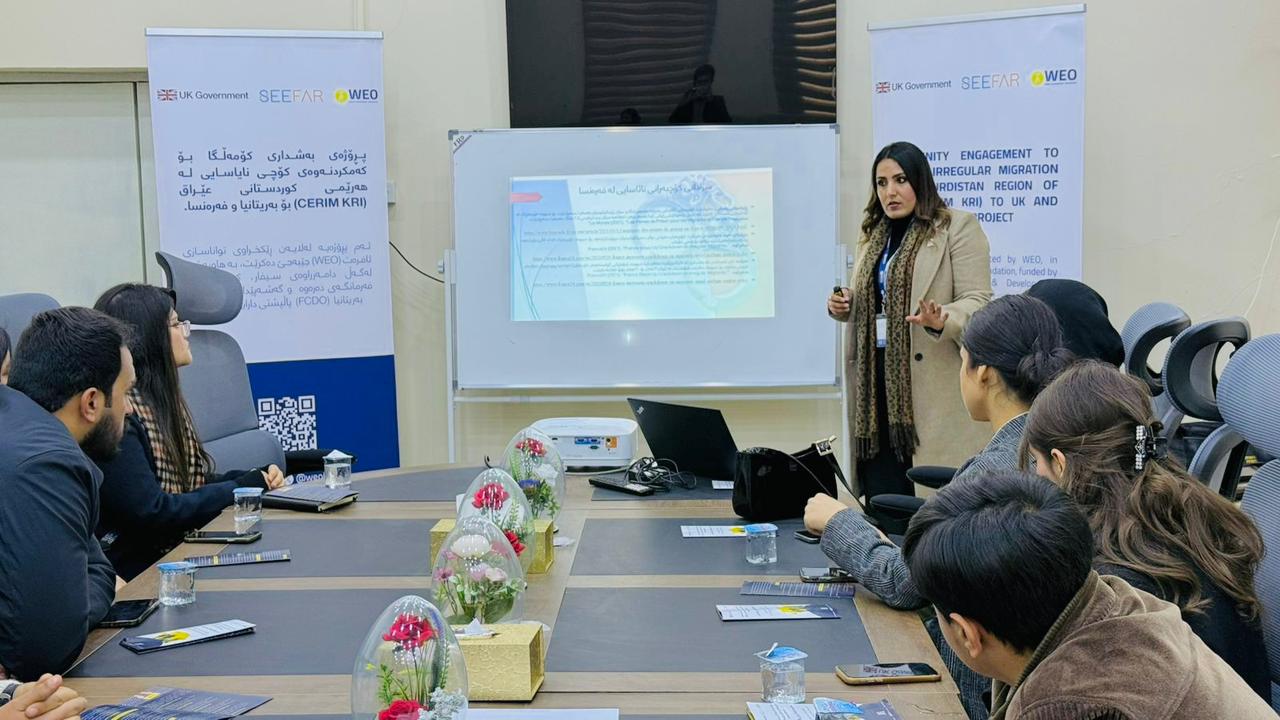
Siam's Story – Soran, Erbil
"Siam was 18 and had been planning to follow his uncle to the UK for months. He came to the storytelling session without much interest. But as participants began sharing their own experiences of dangerous crossings, exploitation by smugglers, families left without news, his attitude changed. He told us afterwards that hearing real accounts made the risks feel concrete in a way they hadn't before. He decided to stay, continue his education, and explore legal options. He has since started volunteering locally and helping raise awareness among peers about irregular migration."
– Ashna Qader, Outreach Assistant, Storytelling and debate session, WEO, Soran, Erbil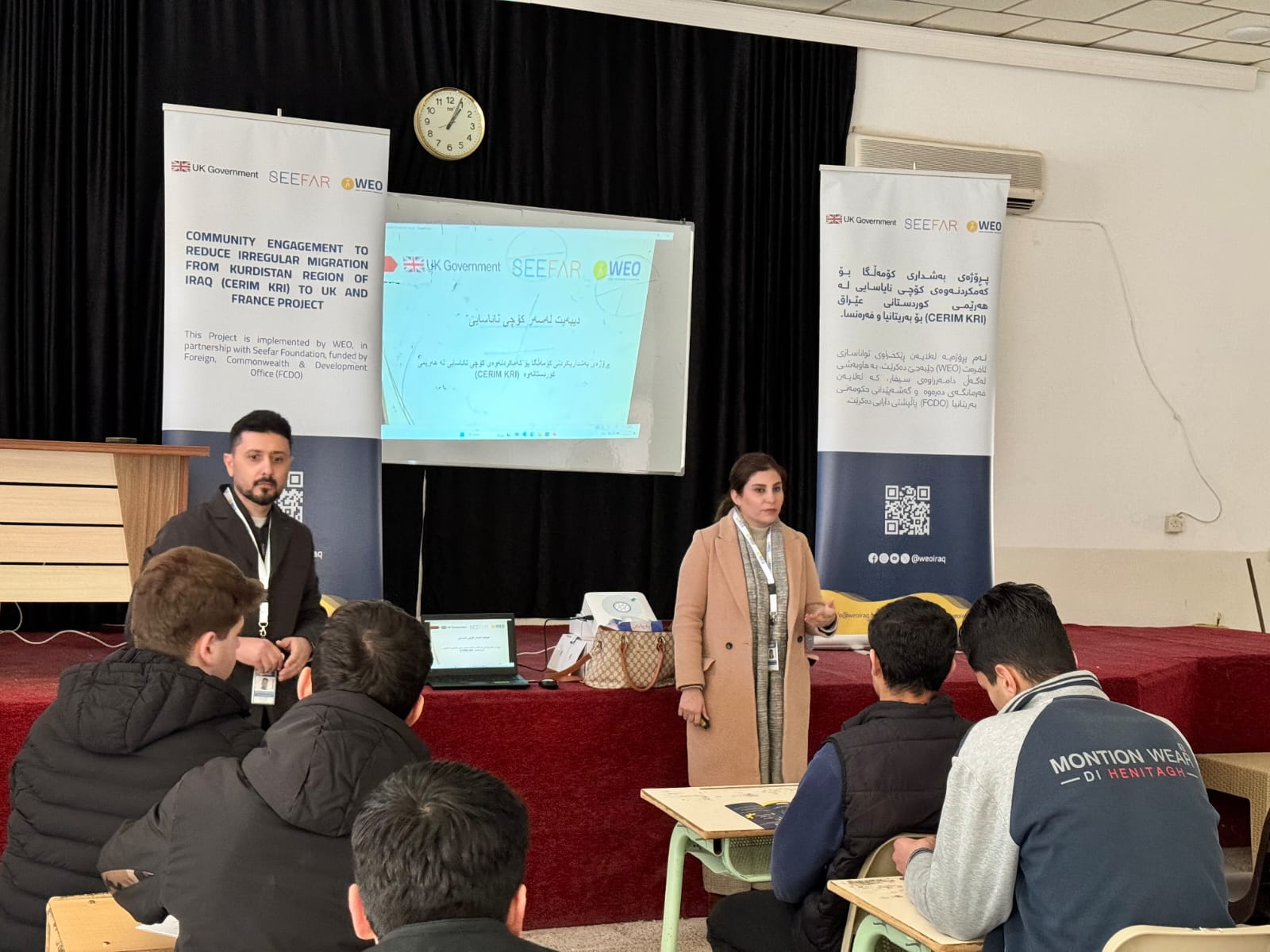
Aland's Story – Chamchamal, Sulaymaniyah
"Aland had been seriously preparing to migrate irregularly. He had already started selling his belongings to pay a smuggler. He attended one of our awareness sessions almost by chance. Hearing first-hand accounts from people who had attempted the crossing shifted his thinking. He told us he had not fully understood what the journey actually involved. After the session, he decided to use the money he had saved to set up a small business with a friend in Chamchamal's market instead. His words at the end of the session stayed with us: 'True success is having the courage to build your life on your own soil, rather than surrendering your fate to the false promises of smugglers.'"
– Harmn Faraidwn, Outreach Assistant, Storytelling and debate session, WEO, Chamchamal, SulaymaniyahKey Achievements
23,250 total participants reached across all CERIM activities in KRI
88% of trained educators and religious leaders demonstrated measurable knowledge gains, exceeding the 65% target
88% of trained community actors delivered their own awareness sessions post-training, exceeding the 60% target
8,100 students reached through 81 community-led sessions delivered by trained educators, the ToT multiplier effect in action
4,000+ chatbot interactions from 49 users, averaging 80+ interactions per user, demonstrating deep, sustained engagement
6 ToT sessions trained 111 educators and religious leaders across Sulaymaniyah, Erbil, and Duhok, in partnership with the Ministries of Education and Religious Affairs
Final outcome data from the difference-in-differences evaluation is expected at the end of May 2026.
What CERIM Taught Us: Community-Led Action Is Sustainable
CERIM showed that early investment in government partnerships pays dividends: securing formal commitments from Iraq's Ministries of Education and Religious Affairs gave trained educators the mandate and legitimacy to lead their own sessions, turning six project-led trainings into 81 community-led ones. A four-day collaborative workshop in Erbil also brought together 20 NGOs and the Joint Crisis Coordination Centre to strengthen the civil society ecosystem that will carry this work forward.
The programme built not just awareness, but infrastructure: trained educators continuing conversations in their schools, community advisory committees active across three governorates, and a WhatsApp chatbot that will remain live long after the project has closed. In a region where the pull of irregular migration is shaped by misinformation, CERIM has shown that credible, community-rooted programming can make a measurable difference, one story, one session, one informed decision at a time.