
Counselling and Livelihoods in Kabul and Addis Ababa
An eleven-month pilot proving that targeted outreach, quality counselling, and real economic alternatives can shift migration intentions at scale
Every year, thousands of individuals from Afghanistan and Ethiopia risk their lives crossing into Europe because they do not believe there are economic opportunities at home. The Missing Migration Links (MML) project was designed to address the problem at its root: reach people already on the verge of departure, address the lack of hope and opportunity driving their decision, and offer a credible reason to stay.
Implemented by Seefar between May 2025 and March 2026, the eleven-month pilot tested a simple but powerful hypothesis through a rigorous independent evaluation comparing participants with a similar group who did not take part. If you can find the people who have taken concrete steps to migrate irregularly and connect them with genuine economic alternatives complemented by sustained psychosocial support, practical mental health and emotional wellbeing assistance, you can expand their minds and shift their behaviours, and you can do it at scale.
The Challenge
Thousands of Afghans and Ethiopians attempt dangerous irregular journeys to Europe each year, driven by the belief that no economic opportunities exist at home. Conventional outreach struggles to identify and reach those already actively planning to leave.
Our Approach
MML combined targeted digital outreach, trusted influencers, and peer-to-peer referral to identify people on the verge of departure, then connected them with sustained counselling, psychosocial support, and verified livelihood referral partners.
Project Details
| Timeline | May 2025 – March 2026 |
| Locations | Addis Ababa, Ethiopia, and Kabul, Afghanistan |
| Beneficiaries Reached | 6.2M+ individuals reached through digital outreach; 5,341 counselling sessions delivered (2,625 in Afghanistan, 2,716 in Ethiopia); 2,597 referred to livelihood partner programmes |
"I completed the training and am waiting for my certificate. When I receive it, I will open my own daycare centre and earn money to support my children's educational fees."
– Female participant, Ethiopia (single mother of five)How the Project Worked
Reaching the Right People: Targeted Digital Outreach, Social Media Influencers, and the Power of Word of Mouth
One of the biggest challenges in this kind of work is identifying the right people to reach. Most programmes reach people based on demographics (age, gender, location) with no evidence that those individuals are actually planning to migrate. MML took a different approach, combining multiple channels to find and engage people already actively planning an irregular journey.
At the centre of this was Pintone, Seefar's proprietary digital outreach platform, which reached over 6.2 million individuals across Afghanistan and Ethiopia against a target of 300,000, a 20x overperformance. Nearly 40,000 potential participants were automatically screened, with targeting continuously refined based on engagement data, language segment analysis, and A/B testing. In Afghanistan, Pintone identified that Dari-language ads generated six times the female sign-up rate of Pashto content, prompting a strategic pivot that significantly improved gender reach.
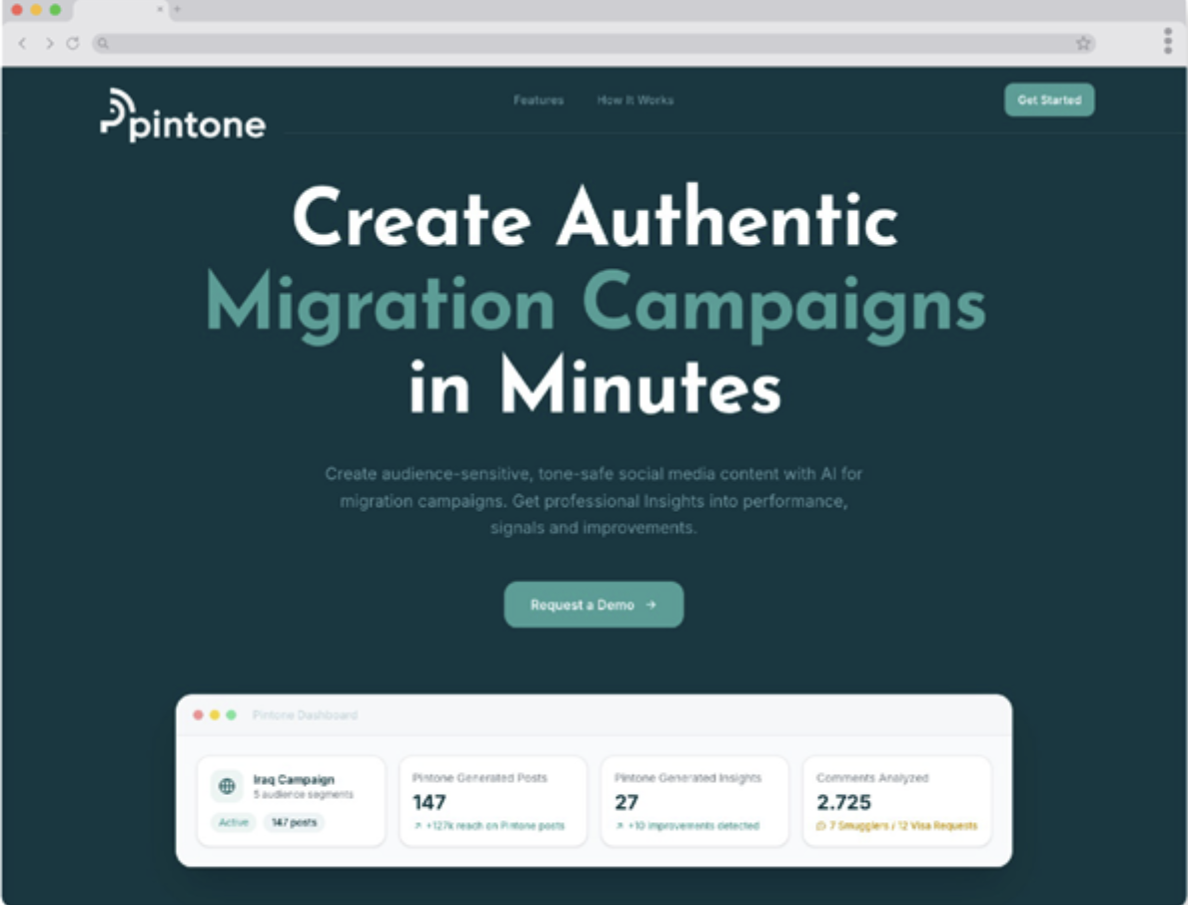
Pintone, Seefar's proprietary social media tool, drove targeted digital outreach across Afghanistan and Ethiopia
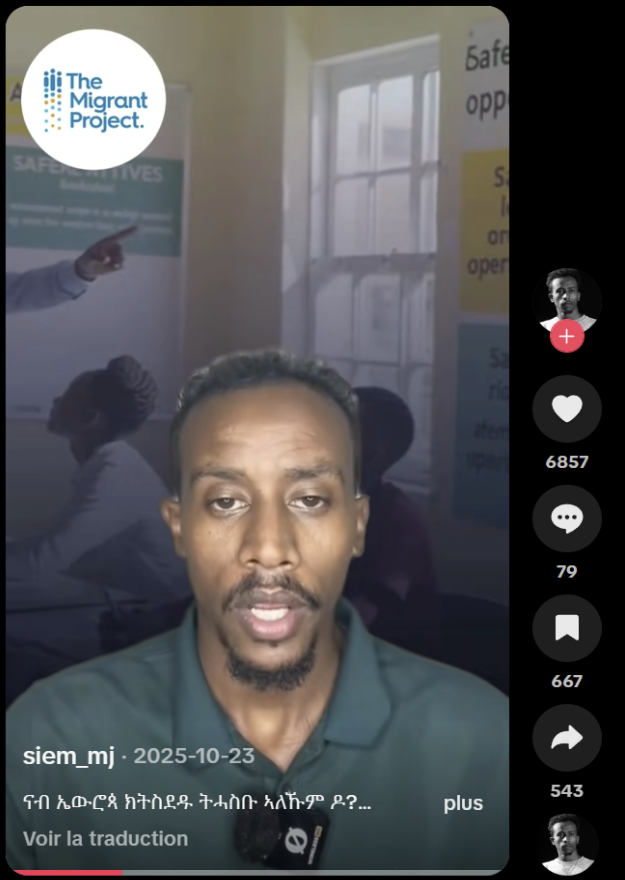
But digital advertising was only part of the MML outreach. Influencer partnerships proved to be one of the most effective channels for reaching the right participants in Ethiopia, where trusted community voices outperformed standard advertising in both quality and cost. A single video by Eritrean content creator Siem Medhanie reversed the Ethiopians/Eritreans ratio entirely, shifting sign-ups to approximately 75% Eritrean while driving the cost per lead down by nearly 80%. This insight informed pivots across the outreach strategy: that in high-trust, community-oriented contexts, credibility travels faster than reach.
Siem Medhanie, an Eritrean content creator, produced a TikTok video calling his followers to sign up for the project counselling service. The video was then reused in the project's own Meta advertising.
Peer-to-peer referral completed the picture. Counsellors shared a standardised WhatsApp message with participants, inviting them to pass it to people they knew in similar situations. By the final three months of the campaign, peer referrals accounted for 40% of sign-ups from people genuinely planning to migrate irregularly in Ethiopia, and 46% in Afghanistan, at zero additional promotional cost. When someone already in the programme recommends it to a friend in the same situation, the quality of that lead is hard to match. Peer-to-peer referral is both a signal of programme quality and one of its most cost-effective low-tech tools to employ in such situations.
Together, these channels demonstrate that effective outreach is not about spending more, it is about reaching the right people through the channels they are already familiar with or trust.
Counselling That Transforms Decision-Making
Once participants were identified and screened, trained Seefar counsellors engaged them directly, assessing their migration intent, psychosocial needs, and readiness for economic alternatives before referring them to partner livelihood programmes. A total of 5,341 counselling sessions were delivered, and 2,597 participants were referred to partner programmes across five active organisations in both countries.
What the evaluation found was counselling itself, before any training or referral, emerged as the primary driver of behaviour change. At the end of the programme, 71% of participants in Afghanistan and 69% in Ethiopia rated counselling 4 or 5 out of 5 for keeping them motivated and engaged in their programme. Participants consistently reported that being listened to without judgment was transformative, independently of any material outcome. In both countries, many participants were carrying acute psychological distress, including grief, anxiety, and trauma from deportation, conflict, or gender-based violence that had never been addressed. The act of being contacted, heard, and supported shifted their thinking in ways that a training course alone could not.
Trained Seefar counsellors deliver sustained psychosocial support alongside practical guidance on economic alternatives
"He expressed deep relief. A few days later, he called back to thank me, saying it was the first time he had been able to open up without being judged."
– Seefar counsellor, reporting on an Eritrean refugee participant, EthiopiaFrom Uncertainty to Entrepreneurship: Ahmad's Story
Ahmad, 27, from Kabul, had made two failed irregular migration attempts before joining MML. Through counselling and referral to an entrepreneurship programme, he launched his own jewellery-making business in Kabul.
Watch Ahmad's story: from two failed irregular migration attempts to launching his own business in Kabul
Partners and Ongoing Support: The Backbone of the Referral Model
A distinctive feature of MML was the sustained support it provided after the initial counselling session. Each participant was assigned a dedicated counsellor who remained their point of contact throughout, from the first conversation through to post-placement follow-up. This continuity was deliberate: participants navigating significant life decisions needed a trusted, familiar relationship to draw on, not a one-off interaction.
Referrals were made across five active partner organisations (two in Afghanistan and three in Ethiopia). Referral partners offered vocational training, employment support, and entrepreneurship pathways. Each referral was tailored to the participant's location, needs, and aspirations. Within four weeks of placement, counsellors conducted structured follow-up sessions with participants, checking in on their wellbeing, progress, and any barriers to attendance. Between sessions, regular WhatsApp check-ins kept the relationship alive. This ongoing support was not an add-on. It was central to the model's effectiveness, helping participants stay engaged at the moments when they were most at risk of dropping out.
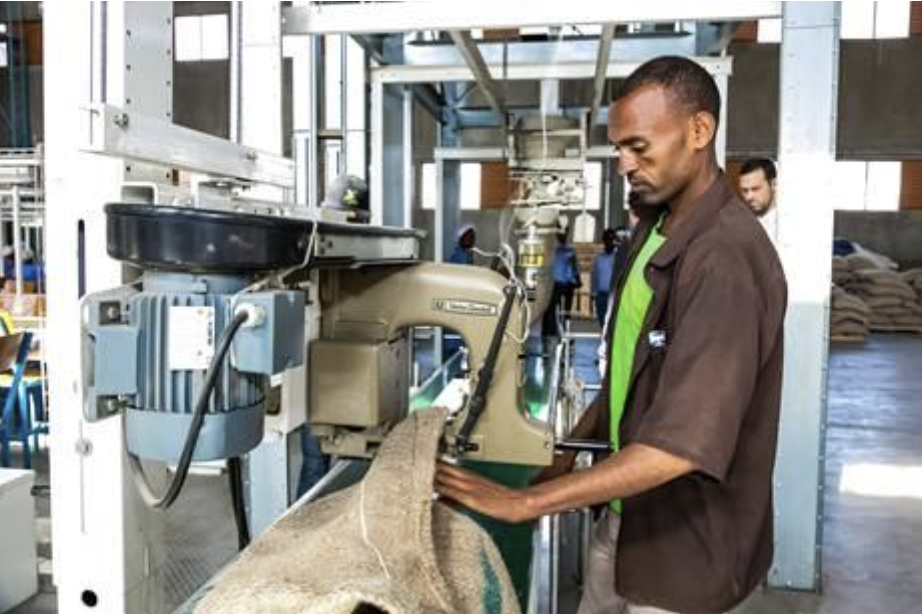
Seefar's referral partners offer skills development and support entrepreneurial aspirations
From Crisis to Hope: Gebretsadik's Story
Gebretsadik rebuilt his life in Addis Ababa after a failed irregular migration attempt, supported by psychosocial counselling and vocational training.
Watch Gebretsadik's story: rebuilding a life in Addis Ababa after a failed irregular migration attempt
Key Achievements
6.2 million individuals reached through targeted digital outreach via Pintone, 20x above target
39,527 potential participants automatically screened against a target of 10,000
5,341 counselling sessions delivered across Afghanistan and Ethiopia against a target of 4,800
2,597 participants referred to partner livelihood programmes across five organisations
85% of participants said they would recommend the service to peers
71% in Afghanistan and 69% in Ethiopia rated counselling 4 or 5 out of 5 for keeping them motivated and engaged
Looking Ahead
MML has done what pilots are meant to do: it has proved the model works through a rigorous evaluation. Targeted identification, quality counselling, and genuine economic alternatives can shift migration intentions and behaviours, even among those who have already taken concrete steps to leave.
The next phase is about doing this better and at greater scale: extending the programme timeline to allow livelihood outcomes to take root, treating counselling as a core mechanism of change rather than a supporting element, and building further on the outreach model. Pintone, influencers, and peer-to-peer referral, used together, can find the right people at a scale and cost that conventional approaches do not match.